

Report Highlights. College dropout rates indicate that 39% of first-time, full-time bachelor’s degree seeking students do not complete their degree program within 8 years.
Related reports include College Graduation Statistics | College Enrollment Statistics | Financial Aid Statistics
Dropout figures exclude students who died, who were totally and permanently disabled, or who left school to serve in the armed forces, foreign aid service, or church missions. Some dropout students may have transferred without notifying the reporting institution.
Adults who are both out of school and have some college with no credential (SCNC) account for approximately 16.1% of the national population.
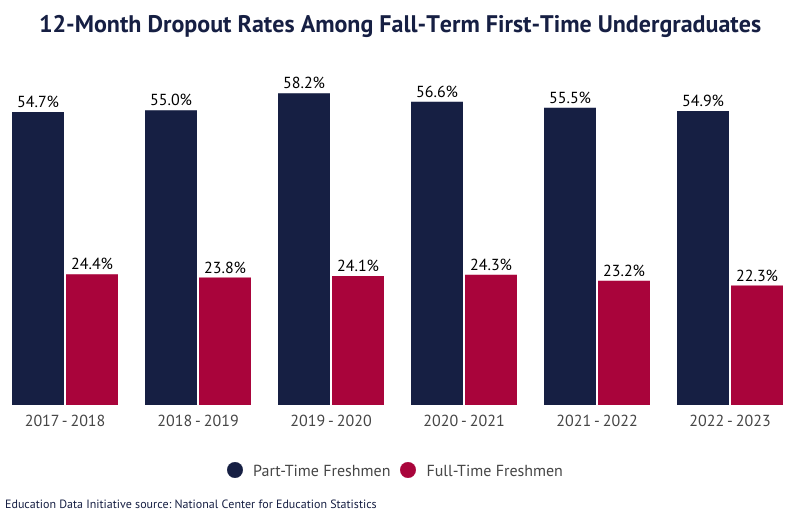
Most college students who drop out of school do so in the first academic year.
While college dropouts earn lower wages than college graduates, SCNCs earn more than high school graduates.

The college dropout or SCNC rate in Alabama is slightly lower than the nationwide average.
The college dropout or SCNC rate in Alaska is among the highest nationwide.
The college dropout or SCNC rate in Arizona is lower than the national average.
The college dropout or SCNC rate in Arkansas is slightly higher than the national average.
The college dropout or SCNC rate in California is slightly higher than the national average.
The college dropout or SCNC rate in Colorado is slightly higher than the national average.
The college dropout or SCNC rate in Connecticut is slightly higher than the national average
The college dropout or SCNC rate in Delaware is lower than the national average.
The college dropout or SCNC rate in D.C. is the lowest nationwide.
The college dropout or SCNC rate in Florida is lower than the national average.
The college dropout or SCNC rate in Georgia is much lower than the national average.
The college dropout or SCNC rate in Hawaii is slightly below the national average.
The college dropout or SCNC rate in Illinois is just above the national average.
The college dropout or SCNC rate in Indiana is slightly above the national average.
The college dropout or SCNC rate in Iowa is on par with the national average.
The college dropout or SCNC rate in Kansas is on par with the national average.
The college dropout or SCNC rate in Kentucky is higher than the national average.
The college dropout or SCNC rate in Louisiana is on par with the national average.
The college dropout or SCNC rate in Maine is much lower than the national average.
The college dropout or SCNC rate in Maryland is slightly below the national average.
The college dropout or SCNC rate in Massachusetts is below the national average.
The college dropout or SCNC rate in Michigan is slightly higher than the national average.
The college dropout or SCNC rate in Minnesota is slightly higher than the national average.
The college dropout or SCNC rate in Mississippi is on par with the national average.
The college dropout or SCNC rate in Montana is greater than the national average.
The college dropout or SCNC rate in Nebraska is significantly higher than the national average.
The college dropout or SCNC rate in Nevada is higher than the national average.
The college dropout or SCNC rate in New Hampshire is higher than the national average.
The college dropout or SCNC rate in New Jersey is lower than the national average.
The college dropout rate in New Mexico is higher than the national average.
The college dropout or SCNC rate in New York is higher than the national average.
The college dropout or SCNC rate in North Carolina is on par with the national average.
The college dropout or SCNC rate in North Dakota is lower than the national average.
The college dropout or SCNC rate in Ohio is significantly lower than the national average
The college dropout or SCNC rate in Oklahoma is higher than the national average.
The college dropout or SCNC rate in Oregon is above the national average
The college dropout or SCNC rate in Rhode Island is below the national average.
The college dropout or SCNC rate in South Carolina is lower than the national average.
The college dropout or SCNC rate in South Dakota is well below the national average.
The college dropout or SCNC rate in Tennessee is on par with the national average.
The college dropout or SCNC rate in Texas is lower than the national average.
The college dropout or SCNC rate in Utah is below the national average.
The college dropout or SCNC rate in Vermont is lower than the national average.
The college dropout or SCNC rate in Virginia is lower than the national average.
The college dropout or SCNC rate in Washington is well above the national average.
The college dropout or SCNC rate in West Virginia is higher than the national average.
The college dropout or SCNC rate in Wisconsin is on par with the national average.
The college dropout or SCNC rate in Wyoming is higher than the national average. 
Other potential reasons students drop out include academic difficulties or lack of support. 26% of students who dropped out said that academic challenges contributed to leaving, while 22% said that mental health challenges were a factor. Students who dropped out or who were seriously considering leaving college were less likely to have family encouragement to attend college. In addition, 41% of first-generation college students have seriously considered leaving school or are at risk of dismissal.
We’re a team of researchers who believe important discussions in education deserve to start from a place of fact, not opinion. From hot button topics like student loan debt to high school graduation rates, our mission is to make sure the data surrounding these topics is open & accessible.
© 2025, EducationData.org. All Rights Reserved.










Leave a Reply