

Sign in with
Forget Password?
Learn more
share this!
9
Tweet
Share
Email
May 15, 2025
This article has been reviewed according to Science X’s editorial process and policies. Editors have highlighted the following attributes while ensuring the content’s credibility:
fact-checked
peer-reviewed publication
trusted source
proofread
by Kurt Bodenmüller, University of Zurich
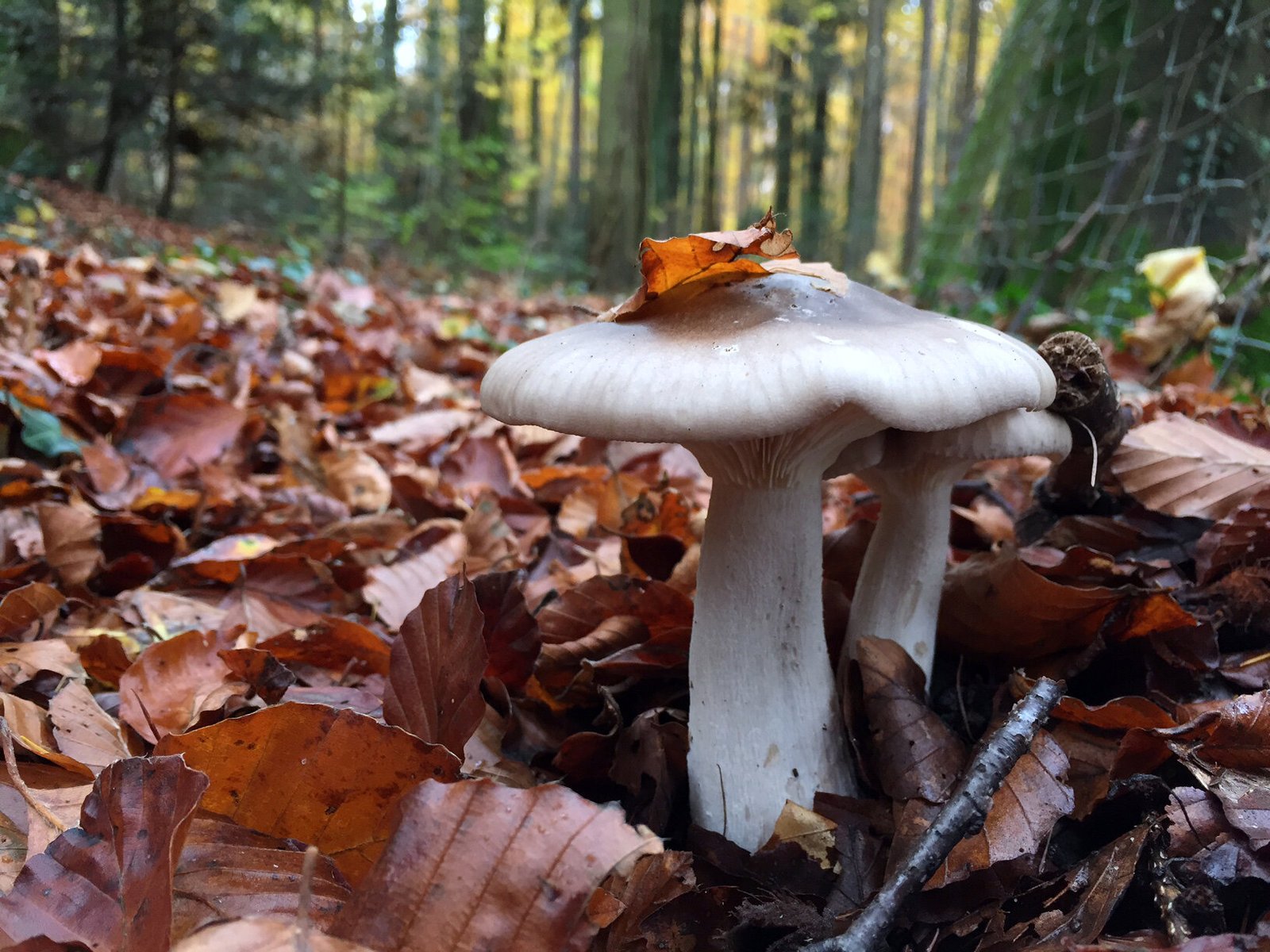
When trees and soil fungi form close associations with each other, both partners benefit. Many tree species have further enhanced this cooperation by forming a concurrent symbiosis with two different groups of mycorrhizal fungi. Those trees cope better with water and nutrient scarcity, which is an important trait for forestry in the face of climate warming.
Despite having enormous root systems, trees are often unable to take up enough water and nutrients from the soil to grow in a healthy manner. That’s why most terrestrial plants have formed symbiotic associations with fungi over the course of evolution.
These mycorrhizal fungi, which either wrap themselves around roots or penetrate the cells of root systems, receive part of the sugar produced by plant photosynthesis from trees as a source of energy. In exchange, trees receive nutrients such as phosphate and nitrate as well as water from the fungi in an unromantic marriage of convenience of sorts.
Using more than 400 different tree species spread around the world as a basis, researchers at the University of Zurich (UZH) and Agroscope have shown that many of them have further improved this cooperation system. Although most tree species form an association only with a single type of mycorrhizal fungi, “some woody plants form an alliance with two fungus types simultaneously,” says Ido Rog from the Department of Plant and Microbial Biology at UZH.
The researchers now report that “bigamy” of this kind improves tree fitness, making trees less sensitive to drought and rendering them better able to cope with nutrient scarcity. “They thus are able to colonize a much larger territory than tree species that form a symbiosis with only one fungus type can,” lead author Rog says.
The broader geographical range and the expanded environmental niche space occupied by those trees are independent of their phylogenetic architecture and evolutionary history. The findings are published in the journal Ecology Letters.
The concurrent associations with two different mycorrhizal fungi enlarge the diversity of trees’ nutrient supply because their roots cover a more extensive soil profile and are capable of coping with a more diverse range of soil properties.
“Our findings indicate that polygamy with two fungus varieties served as a strategy enabling trees to adapt to rougher environmental conditions and to thus colonize nutrient-poorer niches and endure harsher climates,” UZH professor Marcel van der Heijden says. So, the distribution of trees with dual symbioses is much more pronounced in drier areas, for example, than in rainier habitats.
“In forestry, this knowledge could be helpful in the future for selecting tree species specialized in dual fungal associations because they are likely to be better at coping with ongoing global warming and could be used to colonize dry climate zones,” van der Heijden explains.
More information: Ido Rog et al, The Increased Environmental Niche of Dual‐Mycorrhizal Woody Species, Ecology Letters (2025). DOI: 10.1111/ele.70132
Journal information: Ecology Letters
Journal information: Ecology Letters
Provided by University of Zurich
Explore further
Facebook
Twitter
Email
Feedback to editors
6 hours ago
0
6 hours ago
0
7 hours ago
0
10 hours ago
0
12 hours ago
0
2 hours ago
2 hours ago
2 hours ago
2 hours ago
3 hours ago
3 hours ago
3 hours ago
4 hours ago
4 hours ago
5 hours ago
May 13, 2025
May 11, 2025
May 10, 2025
May 9, 2025
May 5, 2025
Apr 28, 2025
More from Biology and Medical
Nov 20, 2024
May 27, 2024
Apr 16, 2025
Nov 20, 2023
Jan 18, 2023
Oct 28, 2019
3 hours ago
7 hours ago
6 hours ago
6 hours ago
8 hours ago
9 hours ago
Trees that form simultaneous associations with two types of mycorrhizal fungi exhibit greater fitness, including improved resistance to drought and nutrient scarcity. This dual symbiosis enables trees to occupy broader habitats and adapt to harsher climates, independent of their evolutionary lineage, offering potential benefits for forestry under climate change.
This summary was automatically generated using LLM. Full disclaimer
Use this form if you have come across a typo, inaccuracy or would like to send an edit request for the content on this page. For general inquiries, please use our contact form. For general feedback, use the public comments section below (please adhere to guidelines).
Please select the most appropriate category to facilitate processing of your request
Thank you for taking time to provide your feedback to the editors.
Your feedback is important to us. However, we do not guarantee individual replies due to the high volume of messages.
Your email address is used only to let the recipient know who sent the email. Neither your address nor the recipient’s address will be used for any other purpose. The information you enter will appear in your e-mail message and is not retained by Phys.org in any form.
Get weekly and/or daily updates delivered to your inbox. You can unsubscribe at any time and we’ll never share your details to third parties.
More information Privacy policy
We keep our content available to everyone. Consider supporting Science X’s mission by getting a premium account.
Medical research advances and health news
The latest engineering, electronics and technology advances
The most comprehensive sci-tech news coverage on the web











Leave a Reply